Tuesday, March 20, 2007

Three pieces on being real

-One-

I read this article in business week about the dubiousness of carbon credits, and I hate to say it but the article made perfect sense:
"Nature does not fall for accounting schemes."
You cant simply buy your way out of your carbon footprint. All of these celebrities and organizations claim a zero carbon footprint by throwing money at the problem, without actually changing any behaviors that might actually lead to a reduction in carbon footprint. sigh.

Here's a way to reduce your carbon footprint: reduce your carbon footprint.

-Two-

I finally read John Maeda's Laws of Simplicity a month ago or so. I had been putting it off, because I was sure that Maeda's insights into simplicity would be so delicately nuanced that my own head scratching about it would seem childish.

His first law, brilliant:
"The simplest way to achieve simplicity is through thoughtful reduction. When in doubt, just remove. But be careful of what you remove."
I was surprised to find myself frustrated by the rest the book. Especially since the second of three sub-headings (!!!!) of the first law of simplicity was: hide the complexity. What? So, if after your first attempt at simplification, you still have complexity, you should just hide it?

Well, having "hide" as the second sub-heading is kind of arbitrary, made so the three subheadings would spell out "SHE". Wait, ten law of simplicity and you have to gum it up with mnemonics? Where's the simplicity in that? You see my frustration? In the end, the book was very good to read, but left me wanting more. I mean, less.

thisislarry's law of simplicity: simplify.

-Three-

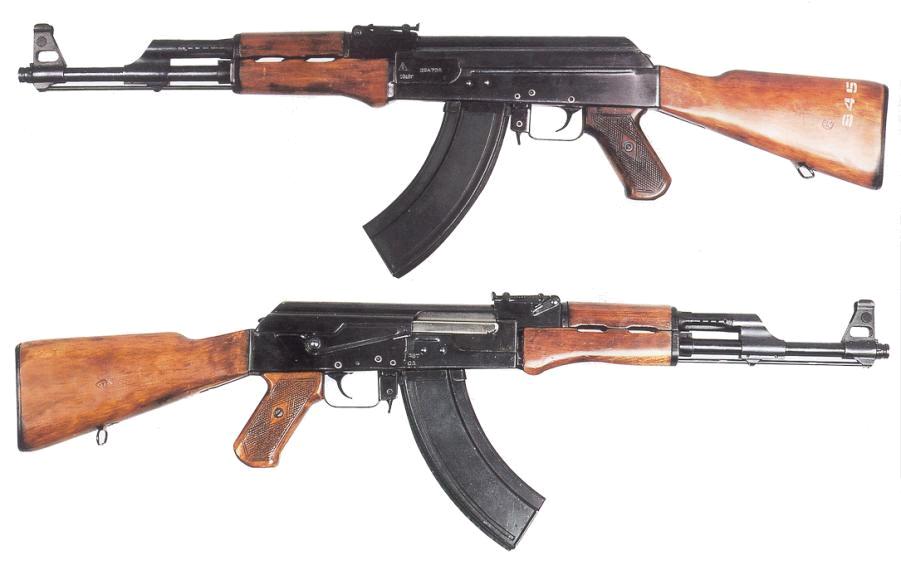
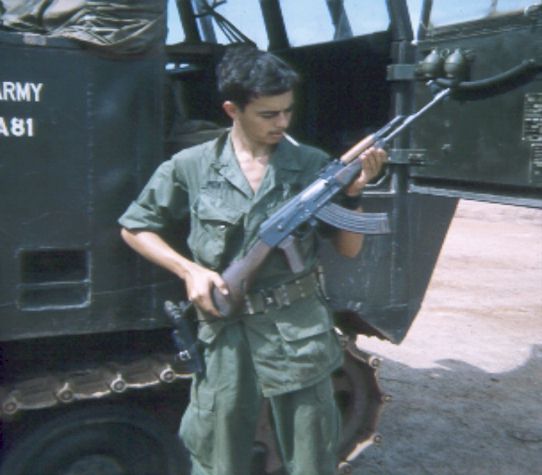
My favorite design icon, the AK-47, is the subject of a fascinating new book, called AK-47 (hows that for simplicity). Think Guns, Germs, and Steel meets The Tipping Point meets The Hot Zone, set in the world right now, seeing world politics being infected by the cheap, ubiquitous, indestructible AK. I especially enjoyed reading about the difference in design philosophies leading to the AK (make it simple) and the opposing American M-14 rifle (make it precise). In the end, the marketplace spoke, and the simple design is still winning.

-L

Labels: ,

Wednesday, June 21, 2006

Darn, Too Reliable!


Every designer secretly wishes that her or his creations become icons. But be careful what you wish for, especially if you happen to be designing small arms. Mikhail Kalashnikov is the designer behind the AK-47, the most popular assault rifle in the world, with over 100 million in existence.

Kalashnikov recently lamented the icon status of his creation:

"I didn't put it in the hands of bandits and terrorists and it's not my fault that it has mushroomed uncontrollably across the globe. Can I be blamed that they consider it the most reliable weapon?"


Good thing I could never say the same thing about the products I've worked on. Or, could I?

Labels: ,

Wednesday, January 25, 2006

AK, all the way!


One of my first posts on this august blog was about one of the most ubiquitous design icons in the world, the
Kalashnikov rifle. About 2 years ago Kalashnikov put out his own brand of Vodka. Now, via Seth Godin, the BBC reports that:

"The Russian inventor of the world's most famous assault rifle has turned his attention to more harmless activities, such as keeping out the rain."


-L

Labels:

Friday, April 08, 2005

More on AK-47s and Vodka

Amazingly enough, I found a post at ItchyRobot (scroll down a bit) on AK-47s and Kalashnikov's own brand of Vodka. Salut!

Labels:

Thursday, April 07, 2005

A univeral icon

What designer hasn't dreamed that their vision of the Widget becomes a universal icon?

MIT Technology Review confirms that the AK-47 is the kick-ass universal icon of small arms.
Get this: The American M-16? 7 million in circulation. AK-47? 100 million. Wow, that's like Mac vs Windows.

Why is the AK so successful? Because it's a good design, done at an appropriate level for the marketplace:

"Kalashnikov ... began to create a design for a new weapon, one that could be assembled with relatively loose tolerances by relatively inexperienced workers, avoiding the supply bottlenecks that often resulted from the German cult of fine craftsmanship..... Not only was the AK-47 simple to manufacture, but it could withstand rough handling in harsh terrain and climates.

The decline of the market for Russian successors to the AK-47 reveals an unintended consequence of its rugged, reliable simplicity. It is all too easy for non-Russians, including anti-Russian terrorists, to reuse, repair, and manufacture it."


Nothing fancy, just enough design to get the job done. And the marketplace responded.


Labels: